00%

We Weren’t That Good

keyboard_arrow_down

A zine made with hand-pasted mechanicals about the Tacoma-based ska band I played in when I was seventeen.

Client: Personal Project

Sector: Music

Role: Writing, design, production

Challenge

The task was to design a multi-page sequential piece with original writing. Telling this story meant reconstructing a decade-old history from my memory and the memories of the kids I played music with in the late nineties.

Solution

I wanted this piece to feel like an artifact from my time making flyers and CD artwork for my band. Type was set into columns in InDesign, printed on copy paper, then cut a pasted onto mechanical boards. Headlines and images were also hand-cut and pasted onto the boards. I ran the copier myself to hold registration on newsprint, then saddle-stitched every copy with red thread.

Result

The copier method forced me to slow down and embrace imperfections. The printed booklet feels like a crafted, hand made zine (because it is). A limited run was printed and given to members of the band and friends from the local scene.

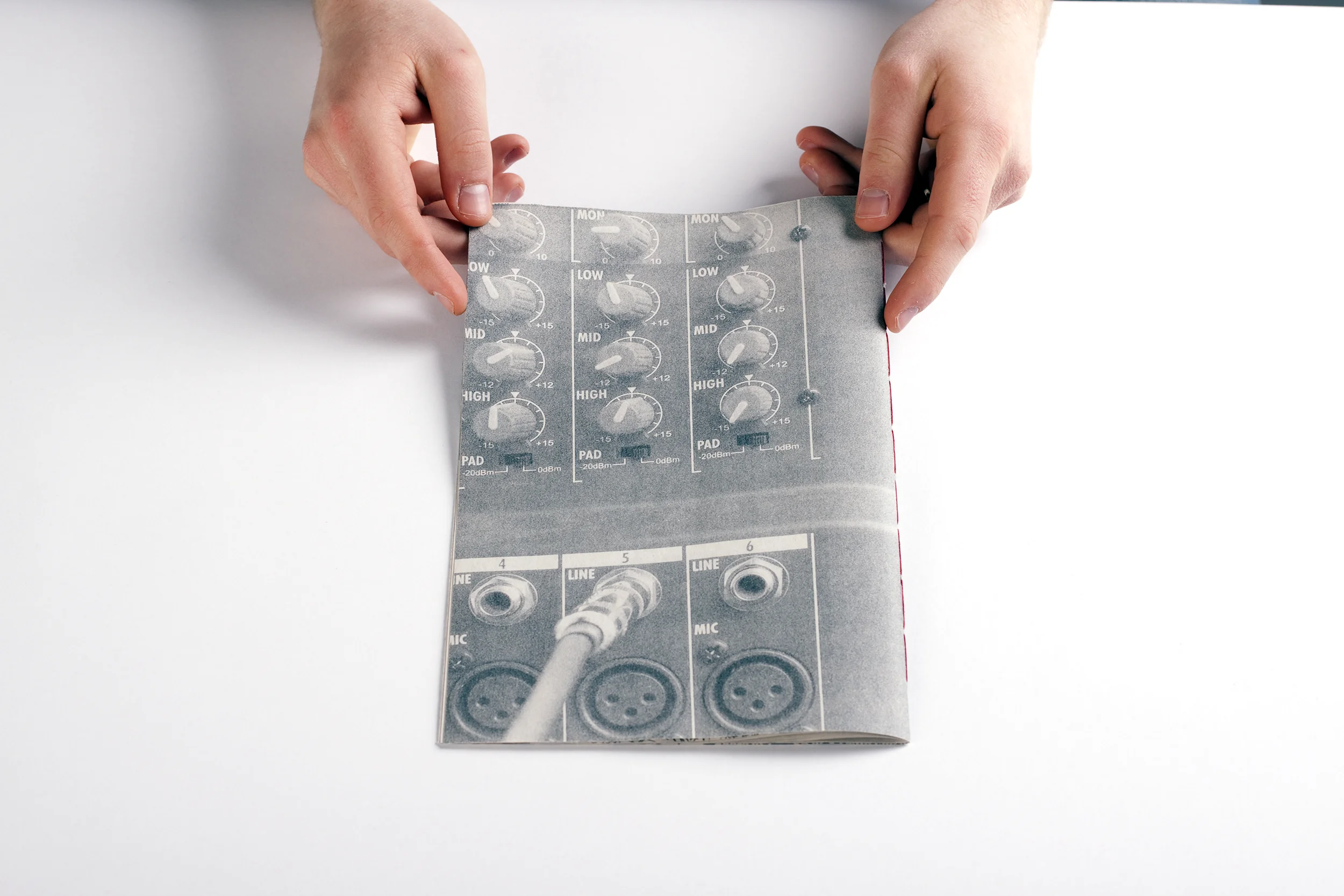
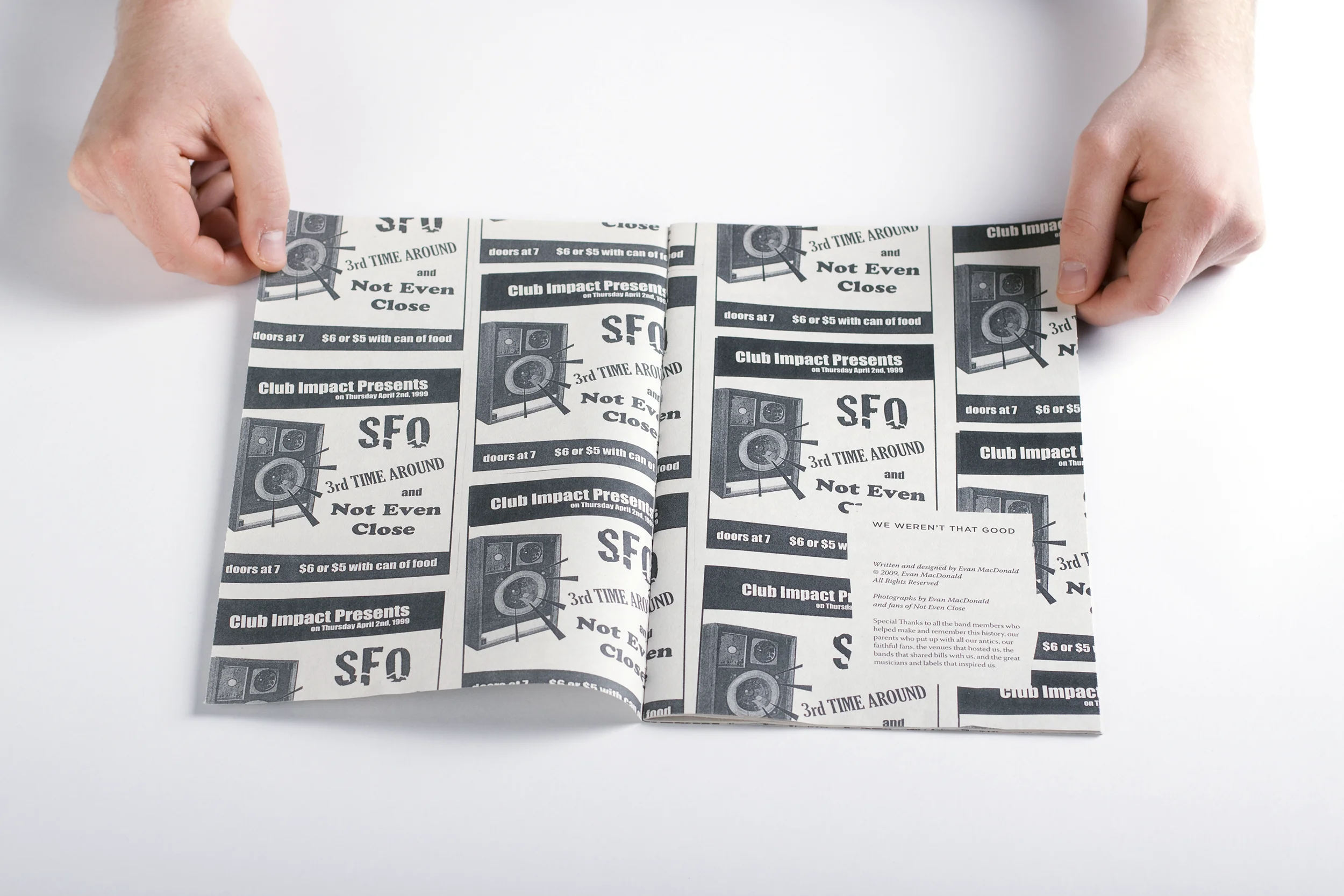
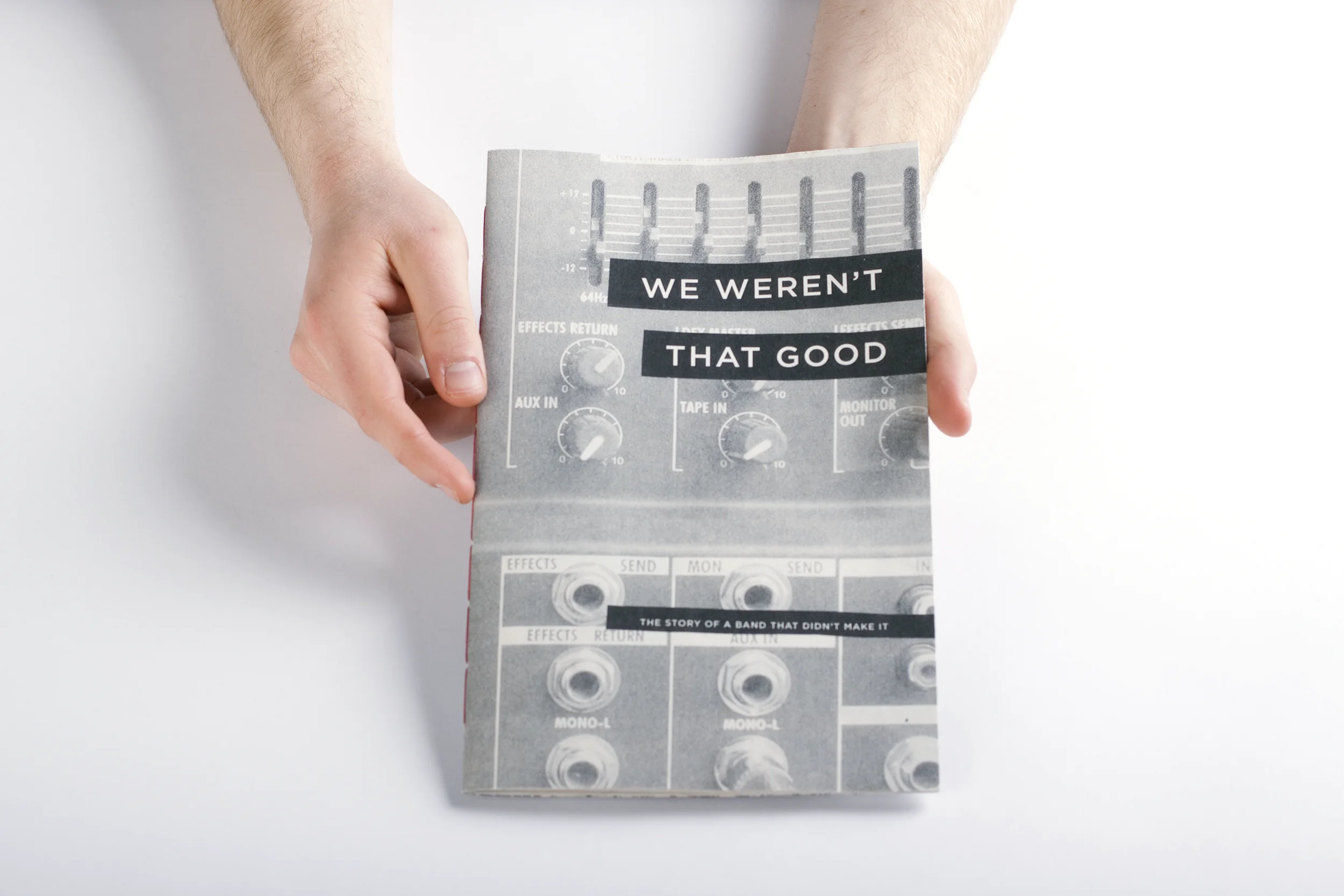
1    The cover of the zine which was printed fully in black and white and on newsprint stock.
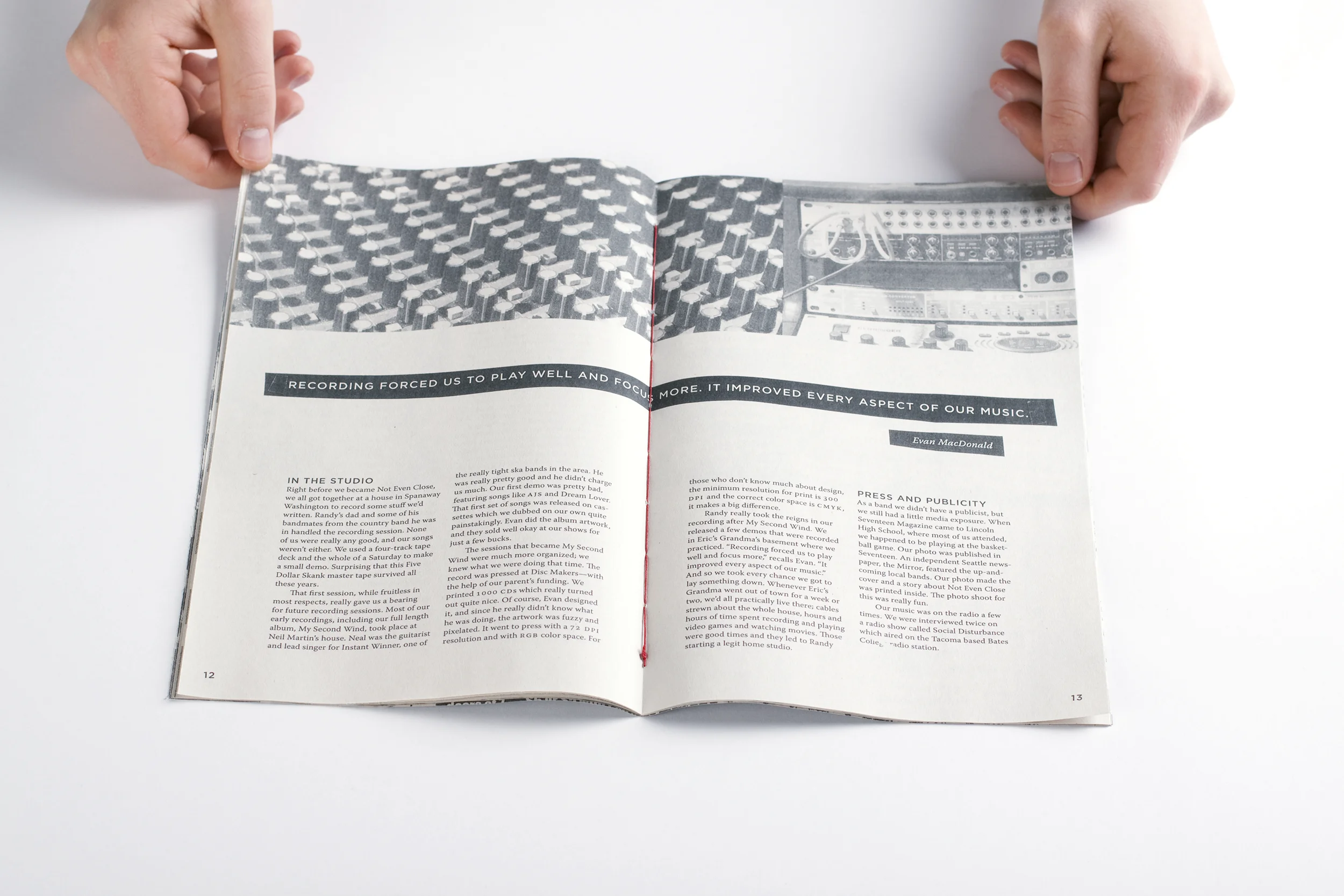
2    Red thread was used to bind the booklet to add to the hand-made quality and to give it a pop of color.
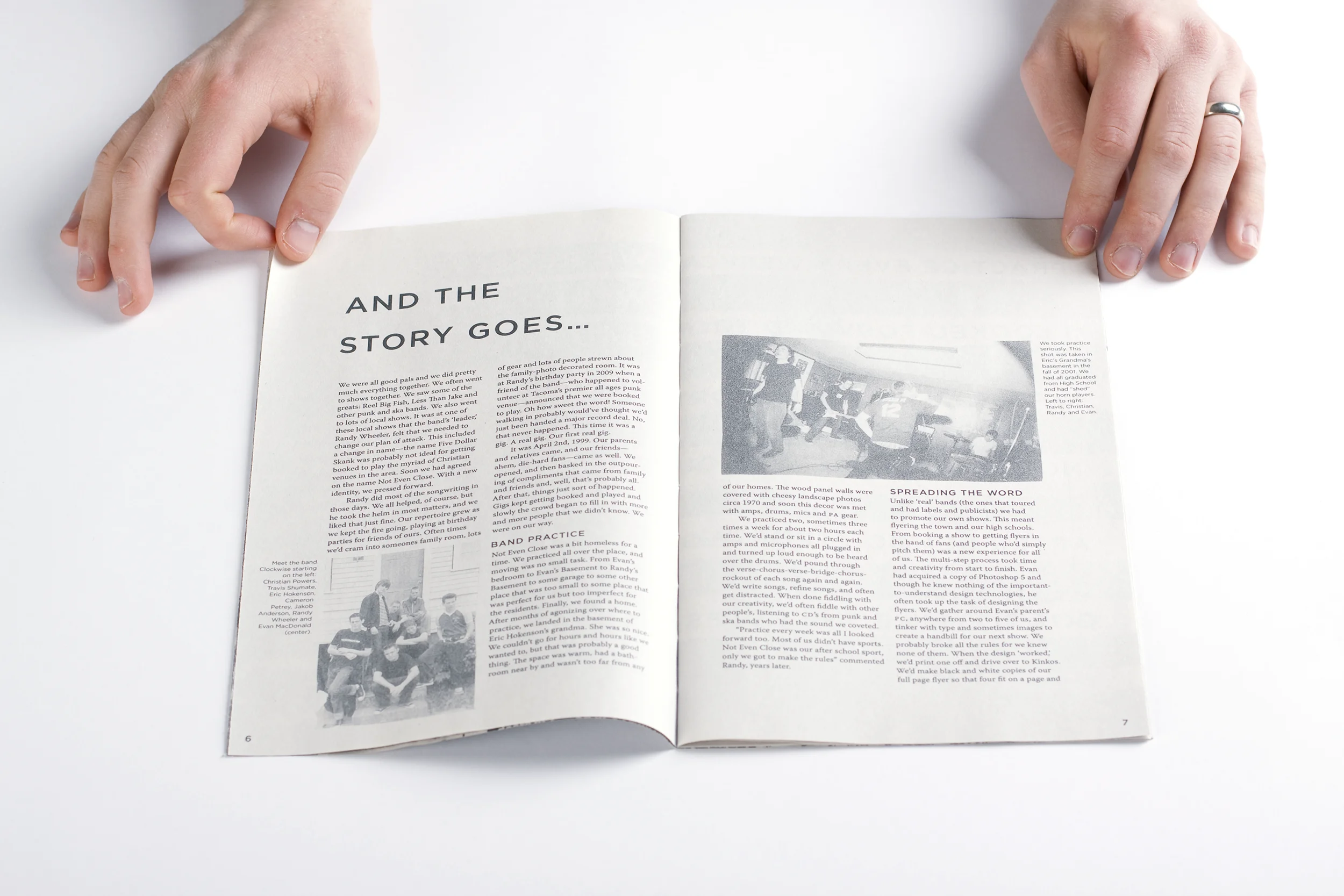
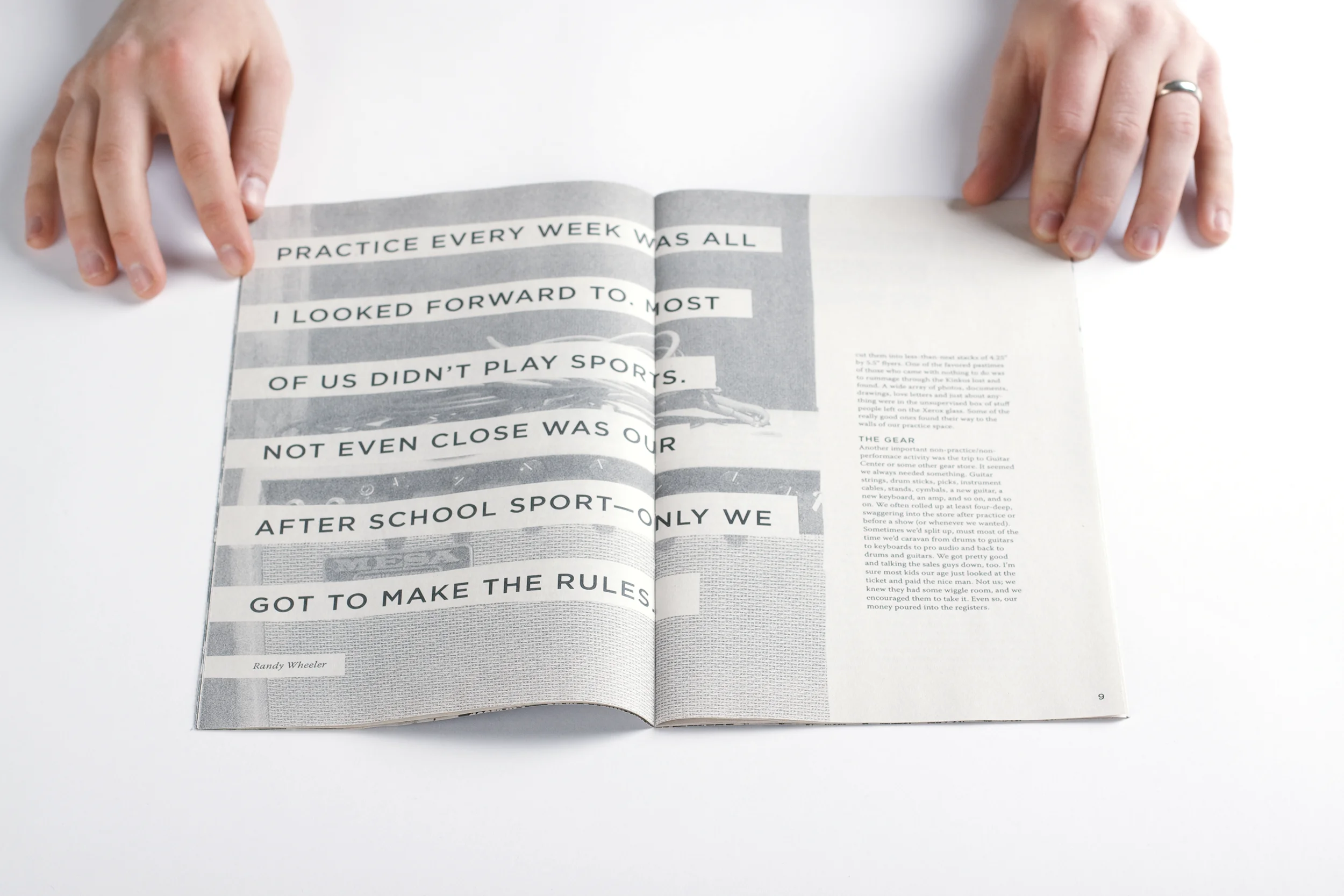
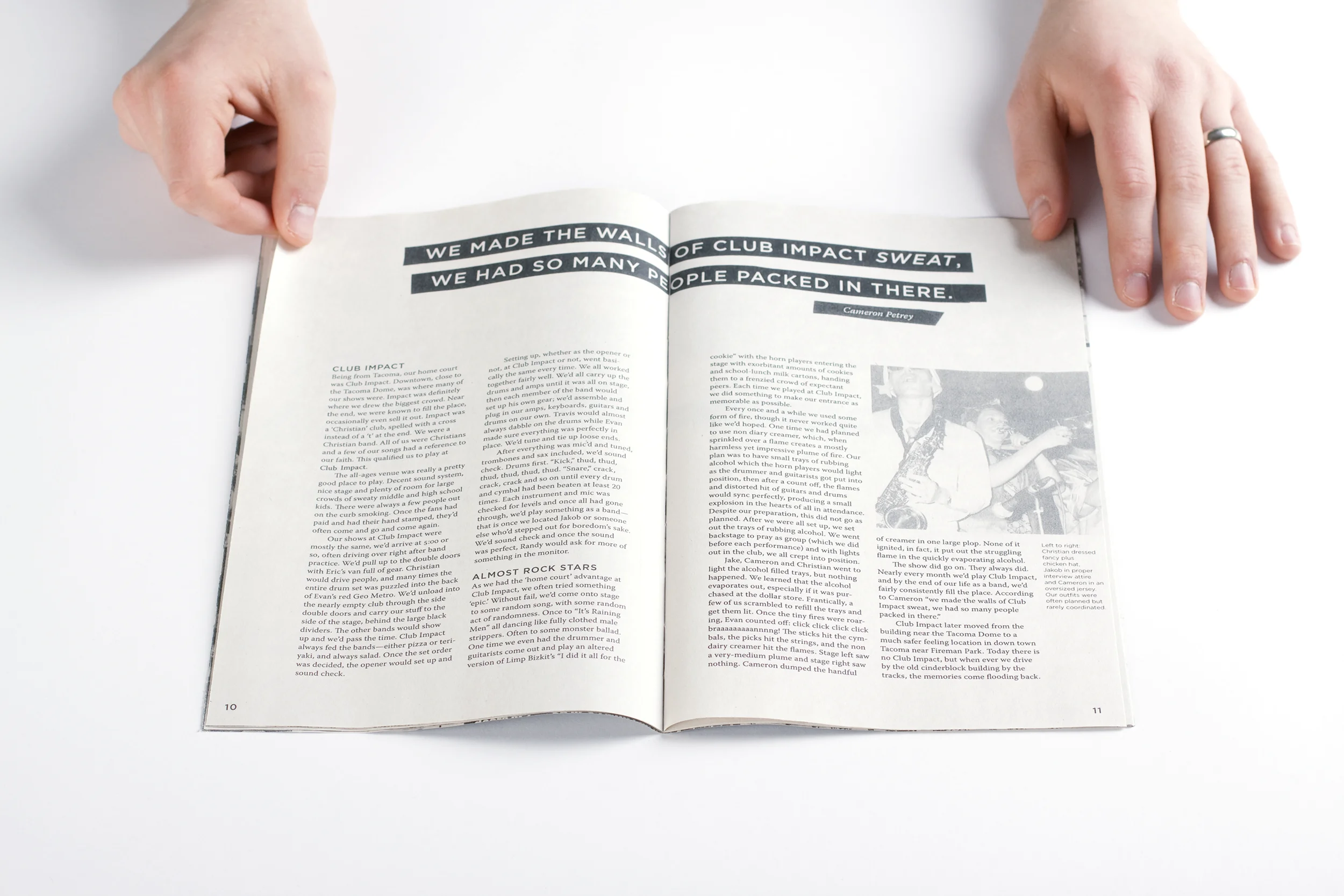
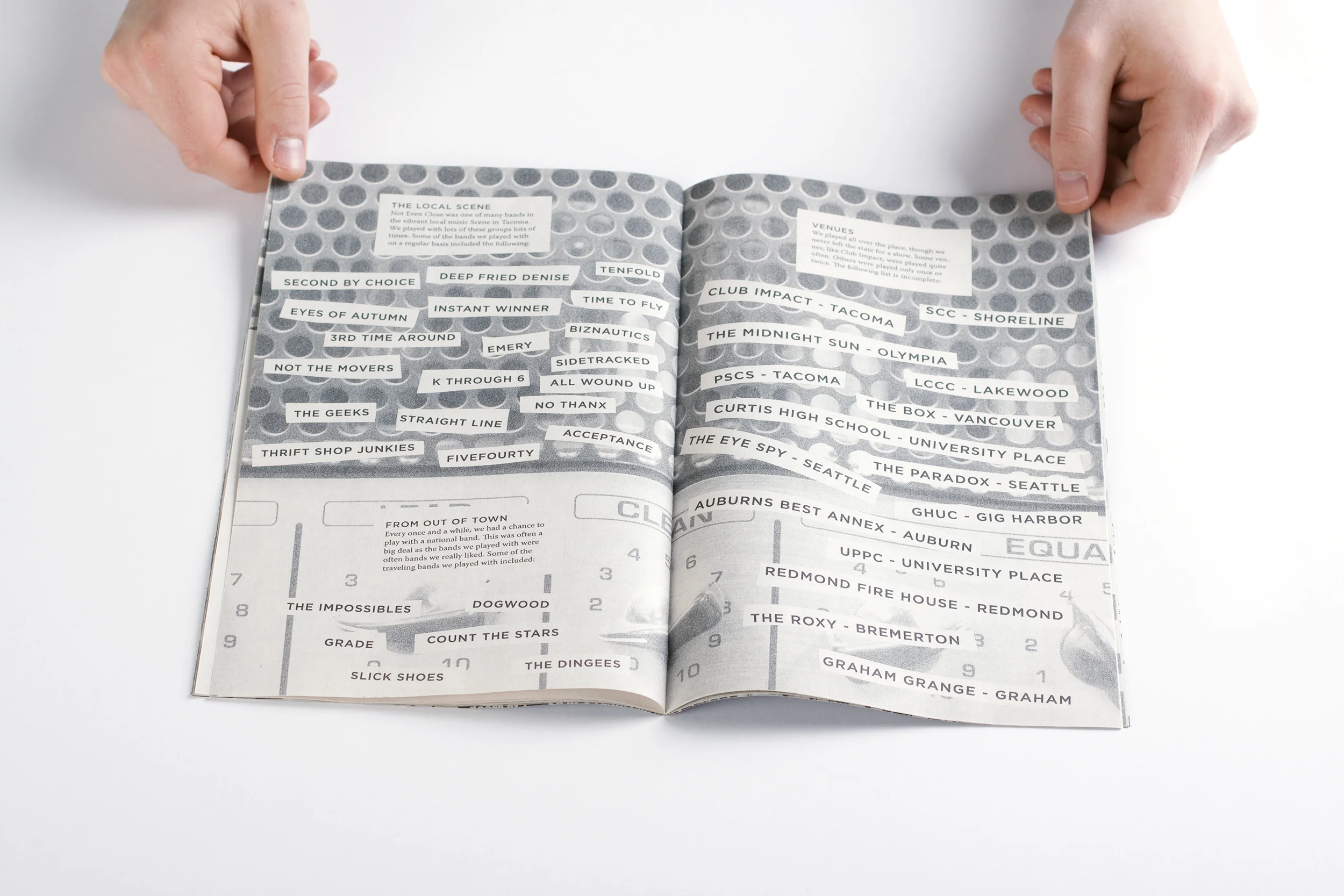
3    The text was set into long columns, printed on plain stock and cut into segments. The clippings were all pasted to mechanical boards which were photocopied to produce the booklet.
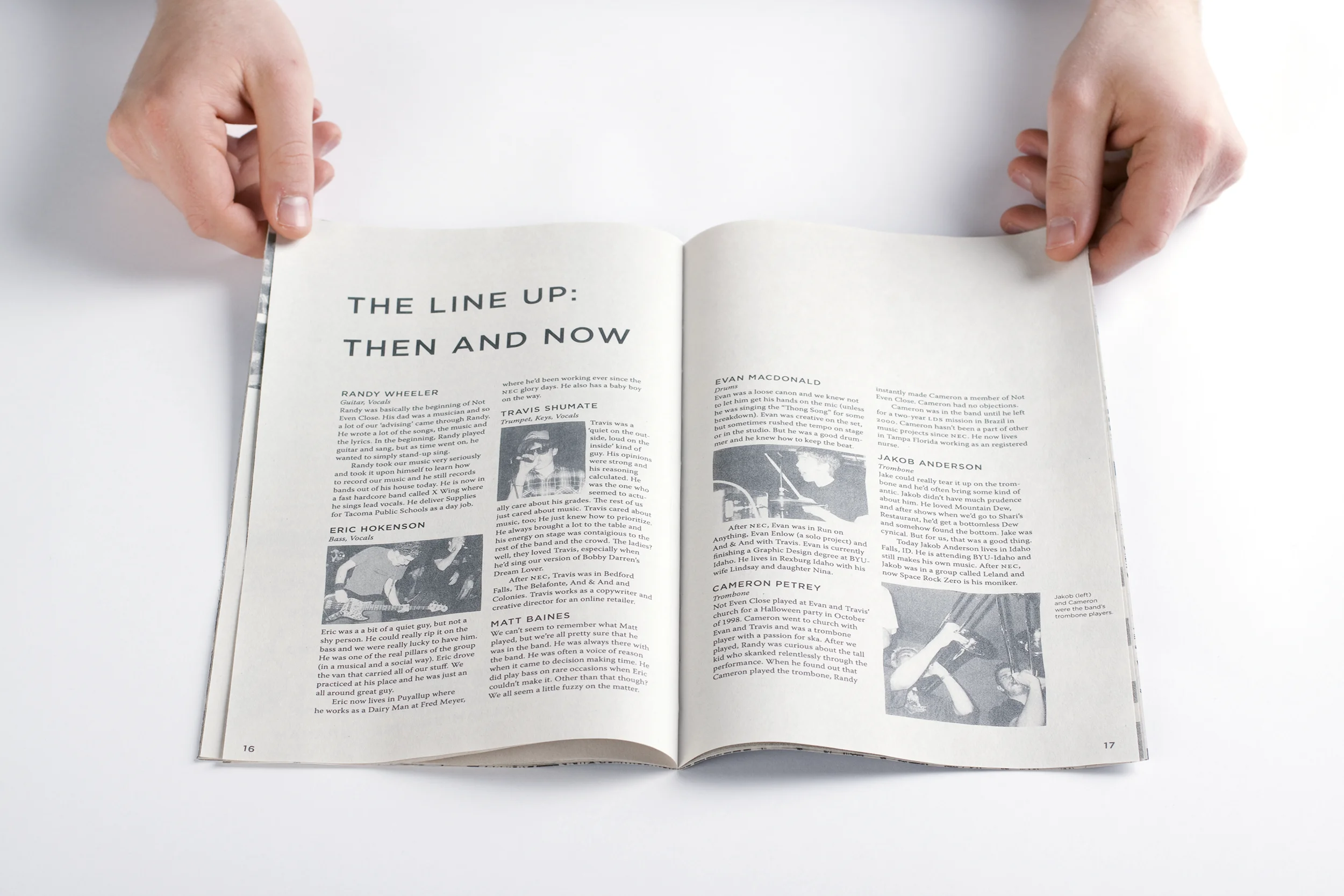
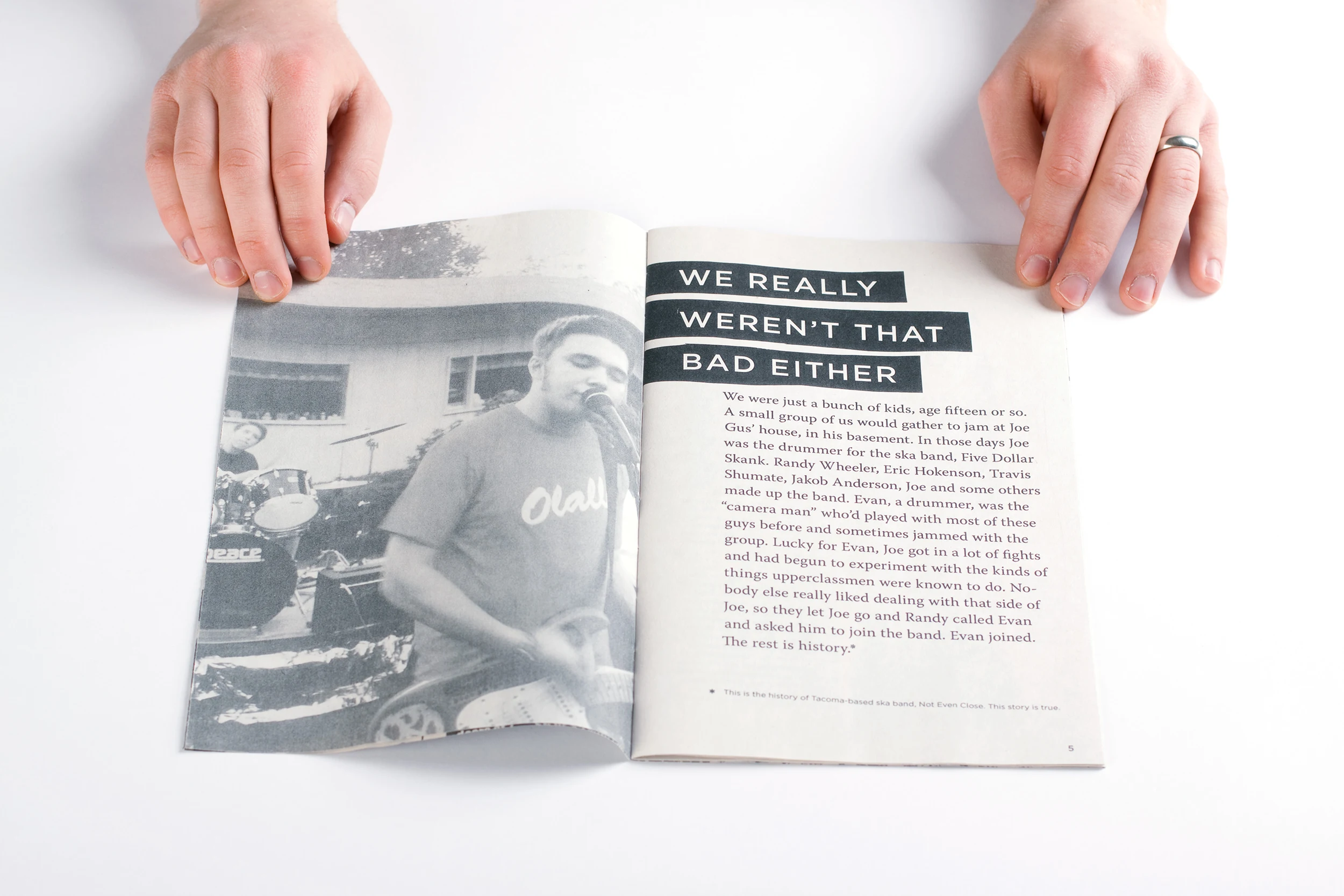
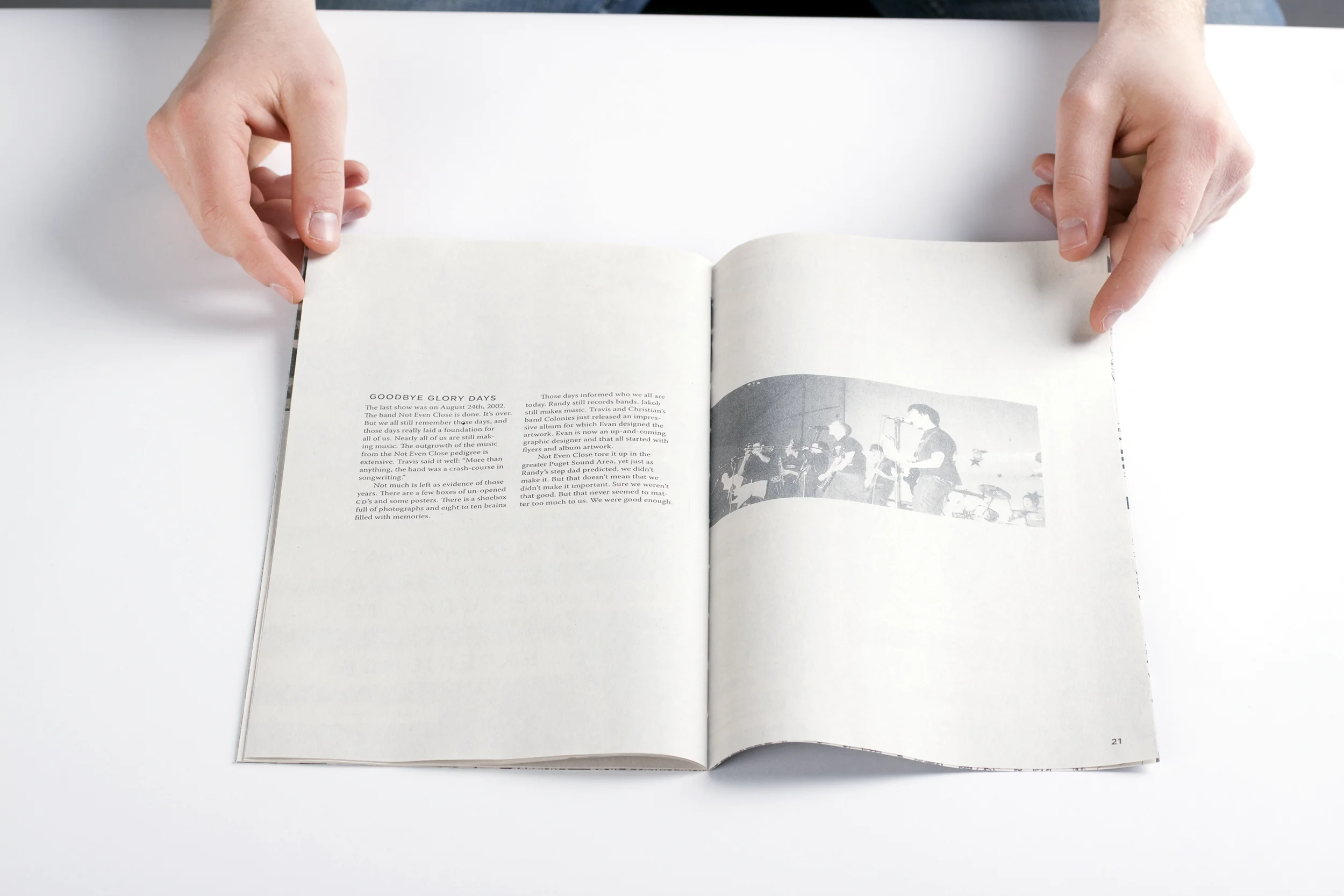
4    The photos were gathered from members of the band and from friends and fans from our "glory days."
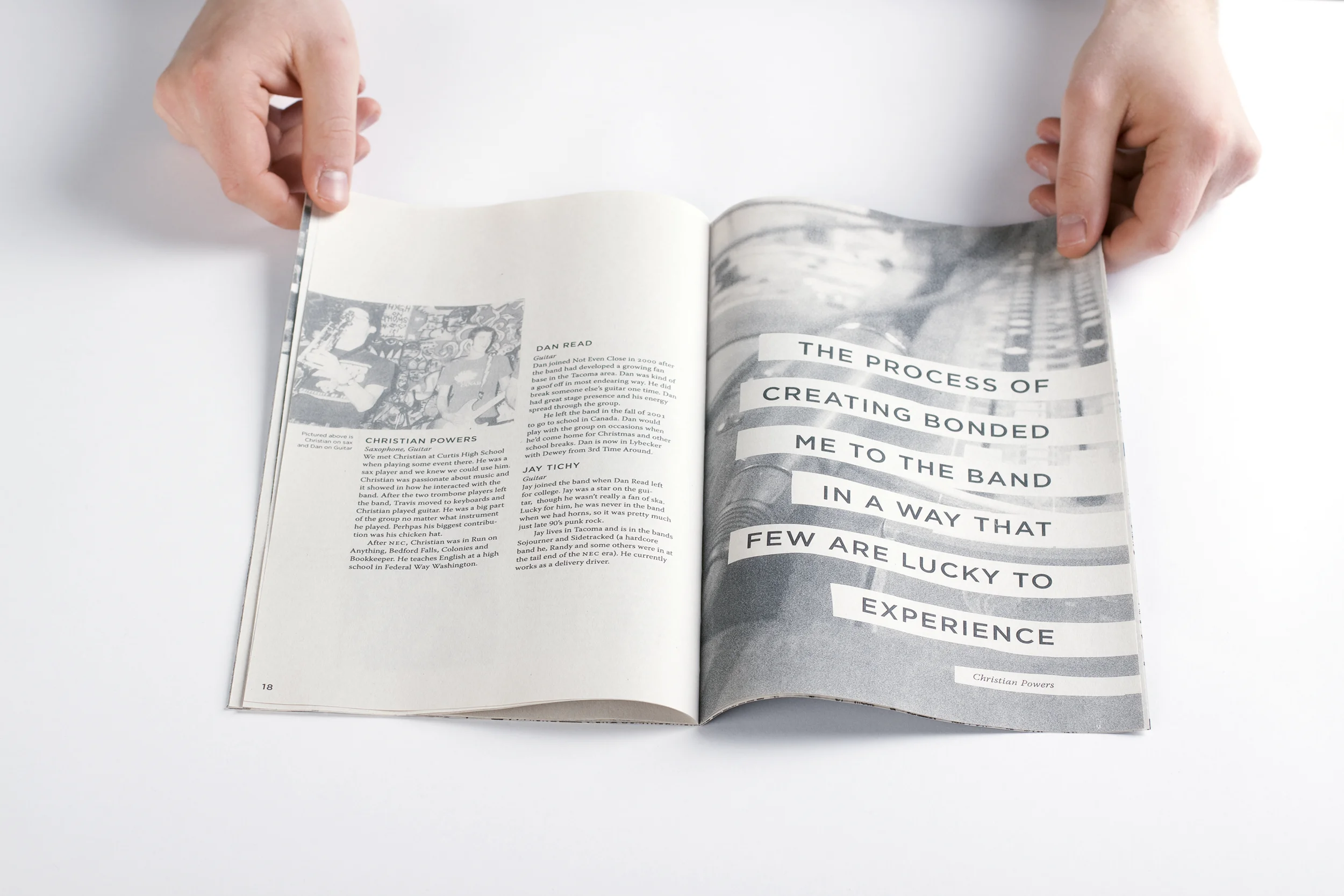
5    A list of the members of the band continued from the previous spread.
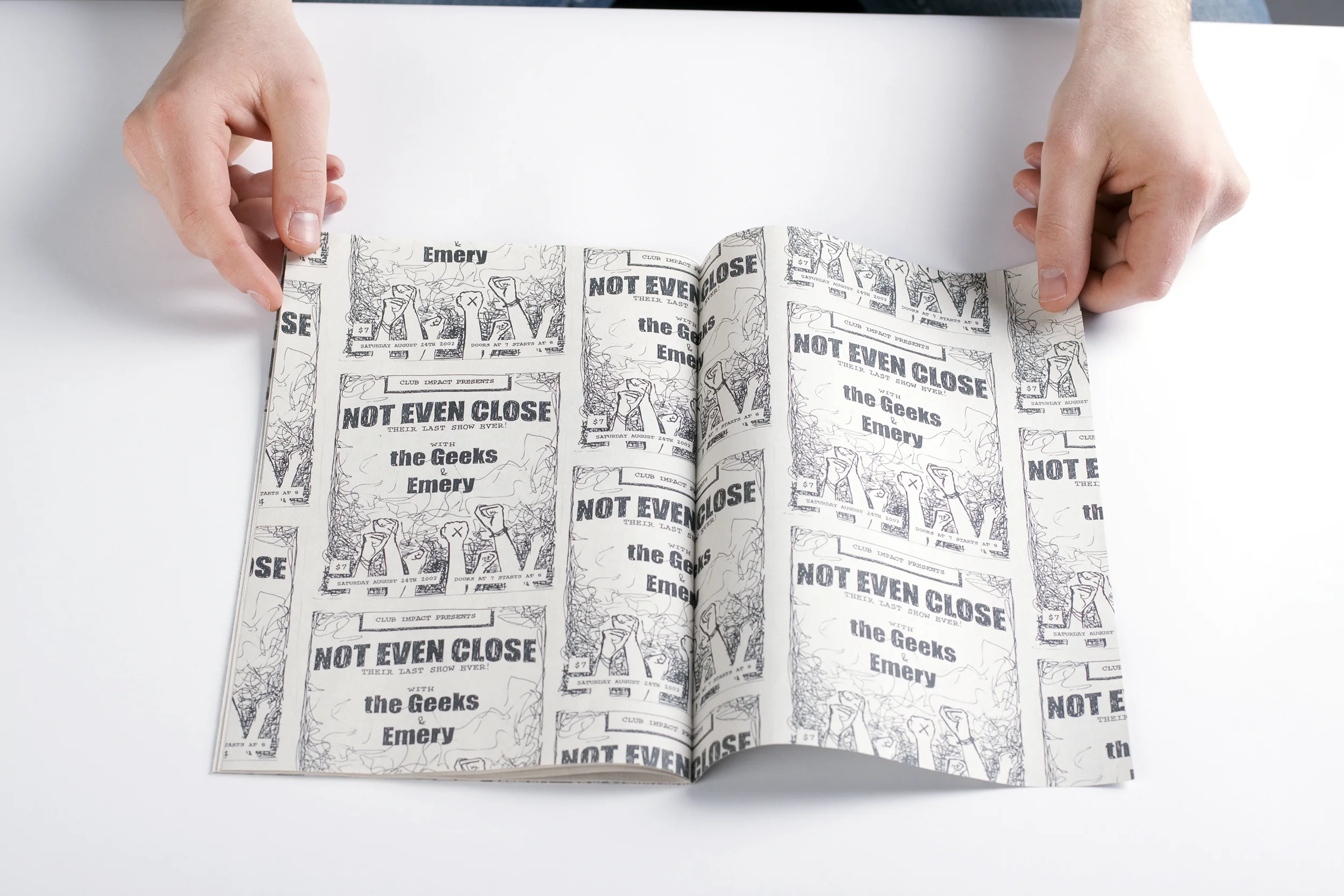
6    Back cover.
keyboard_arrow_left
keyboard_arrow_right

Playing music with this group of friends is the reason I became a designer.

There really isn’t anything from my time in design school that belongs in my book over 15 years after graduation. This is the exception.

Back before I knew design was a profession, I was the one who made the flyers, dubbed cassettes and organized the artwork we photocopied to fill  tape cases. When we finally recorded an actual album, I was the one who designed the artwork (learning the hard way about PPI and RGB color space).

Ten years later I was a design student with an assignment to build a sequential piece with original writing, and this was the story I had.

I interviewed everyone from the band. I collected stories from other friends who were in that late 90s, early 00s, Tacoma music scene. Combined with my perspective, the challenge was keeping it brief enough to not exceed the assignment. Those constraints served the project in the end.

Cut and paste

I for this project I wanted to get out of the computer. The ‘design’ work I’d done in the band was a mix of finding things, printing type on my home printer, and trips to copy shop. Later as a design student, I’d been reading about how layout was done before computers. Photo type, mechanicals, paste-up. I didn’t have access to the old equipment, so I built a hybrid: type set in InDesign, output as columns of text and headlines on plain stock, hand-cut snippets and chunks of the story, then pasting everything onto boards. Not too dissimilar form the gig flyers.

I had to make dummies to get the pagination figured out. I even put crop and registrations marks onto the boards. In the end I made 12 boards to create 12 spreads and result in a 24-page zine.

As a design student, I was familiar face in the local print shop, but I still had to talk my way behind the counter. I wanted the copier look. I had to fuss with the copier until it could handle my light weight newsprint stock and a slightly fussy registration. I learned a lot about copiers that day.

I printed a run of about 20 zines, then folded, trimmed and hand saddle-stitched the binding—something I’d never have done as a teenager, but it was finishing touch that bridged the gap in time, experience, and taste. It really tied the whole thing together (sorry, I couldn’t resist).
The result

Everyone in the band got a copy and a few friends of the band took one, too.

What I kept was a little proof that design is less about the tools you use and more about the relationship between the elements. Obviously the tools influence the look, and knowing more tools gives you access to more looks. I’ve not used this process since, but what I learned by stepping back, slowing down, and making conceptual choices in not only style but production method are principles of process that I draw upon every day.

Credits:

Booklet photography by Tori Dickson

Archival photography by the band and friends of Not Even Close, much of it from the collection of Rachelle Tischy